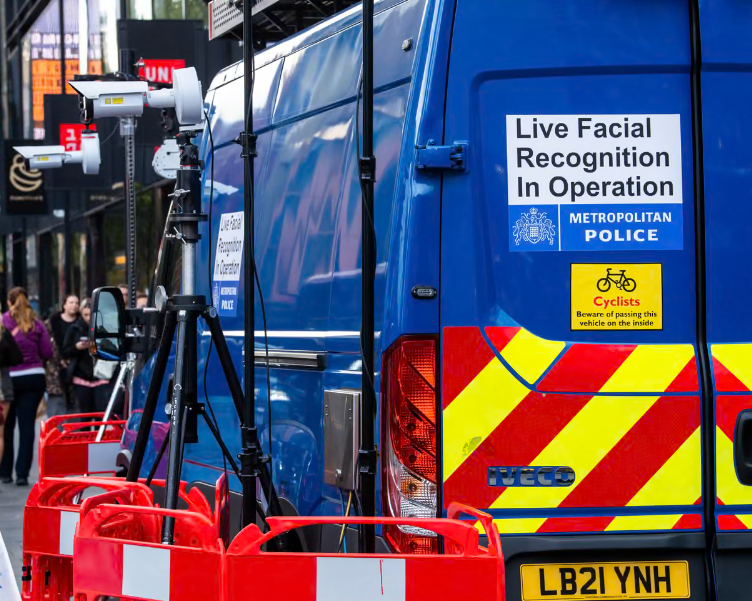
Inspectors found that some police officers took action based on potential matches discovered during retrospective searches, without conducting adequate verification.
An official report has found that if police rely on inaccurate facial recognition data as evidence, they risk arresting innocent people—particularly those from minority ethnic groups.
While the technology can aid in the fight against crime, the report reveals that it is prone to errors and biases. Furthermore, operators are not always aware that they must conduct additional investigations to verify the data.
The report, released Wednesday by His Majesty’s Inspectorate of Constabulary (HMIC), focuses exclusively on “retrospective” facial recognition (RFR) technology. Compared to “live” (real-time) facial recognition—used to identify suspects in the moment—this technology is considered less controversial and easier to manage.
The report states: “Some investigators are unaware that RFR results constitute intelligence rather than evidence, and that further investigation is required before law enforcement personnel take any enforcement action.”
“This creates a risk that individuals could be misidentified or arrested, which may undermine public confidence in the technology.
“We found that some investigators failed to conduct sufficient verification checks before taking action based on potential matches. In a small number of cases, officers relied too heavily on the results of rapid fingerprint comparisons, leading to inappropriate investigative actions.”
The report states that the algorithm remains prone to bias, including a higher likelihood of incorrectly flagging members of minority ethnic groups as suspects.
The report notes: “More must be done to reduce the risk of wrongful arrests. Auditors also discovered that some users uploaded poor-quality or unsuitable probe images—such as blurred photos or images containing multiple faces—which compromised the system’s ability to produce reliable matches.”
Inspectors also found that custody images, which should have been deleted, were instead retained—a practice that risks damaging public trust.
The report observes: “Legislation has failed to keep pace with developments in facial recognition technology, and there is no comprehensive legal framework to govern its use. This makes it difficult for law enforcement agencies to understand the legal basis for using live facial recognition, as well as the safeguards required to protect the public.”
Catherine Stone, an inspector with His Majesty’s Inspectorate of Constabulary, stated that continued public support hinges on demonstrating that the technology is being used correctly: “The police must be able to show that appropriate safeguards are in place, that risks related to bias and data retention are effectively managed, and that decision-making remains subject to human judgment. A clearer legal framework, more rigorous national standards, and stronger governance and oversight mechanisms are essential to maintaining public trust.”
Senior police officials view facial recognition technology as the next major leap forward in the fight against crime, while skeptics see it as the next great threat to civil liberties.
Jaslin Chagger of the organization Big Brother Watch stated: “It is alarming that the police treat facial recognition as definitive evidence rather than a probability score.”
“This practice significantly increases the risk of innocent people having police show up at their doors to arrest them—for crimes allegedly committed in towns they may have never even visited, as we have seen happen before.
“Worse still, the police do not even keep a record of when they use retrospective facial recognition technology. This means individuals could unknowingly become suspects in a criminal investigation, without even knowing why they are being accused.
“The police should not be permitted to continue using algorithms that lack adequate safeguards and are inherently biased—algorithms that are more prone to misidentifying women, as well as Asian and Black individuals, and that scan through millions of unlawfully retained custody photographs.”
Ben Russell, the lead for facial recognition at the National Police Chiefs’ Council, stated: “The police are committed to using retrospective facial recognition technology in an ethical, proportionate, and responsible manner to help investigate crimes, bring offenders to justice, and keep communities safe. We are pleased that His Majesty’s Inspectorate of Constabulary has recognized the exciting potential of this technology.”
Professor Pete Fussey of the University of Southampton, who has served as an advisor on police use of facial recognition, remarked: “Meaningful human review of AI systems is a legal requirement; yet, this report highlights instances where investigators have simply accepted the computer’s suggestions at face value, without any further verification.”